Planning a home extension in Greenwich: heritage, conservation and sustainability
Getting planning permission for a home extension in Greenwich is more demanding than in many other London boroughs. The World Heritage Site designation, the extensive conservation areas and the Royal Borough's active planning department create an environment where applications are scrutinised carefully and where the quality of the argument matters as much as the quality of the design.
That is not a reason to be discouraged. It is a reason to appoint an architect who understands the context and knows how to make a compelling case. New Makers Bureau has experience preparing planning applications in heritage-sensitive contexts and understands what Royal Borough of Greenwich planning officers are looking for.
The World Heritage Site buffer zone
The UNESCO World Heritage Site centred on the Old Royal Naval College, the National Maritime Museum and the Royal Observatory covers a significant area of central Greenwich. The buffer zone extends well beyond the core buildings and affects planning decisions across a wide part of the borough.
Within the buffer zone, any development is assessed for its potential impact on the Outstanding Universal Value of the World Heritage Site. This does not preclude extensions or alterations to existing properties, but it does require that they are designed with real care and that the planning application makes a positive case for the proposal's compatibility with the heritage setting.
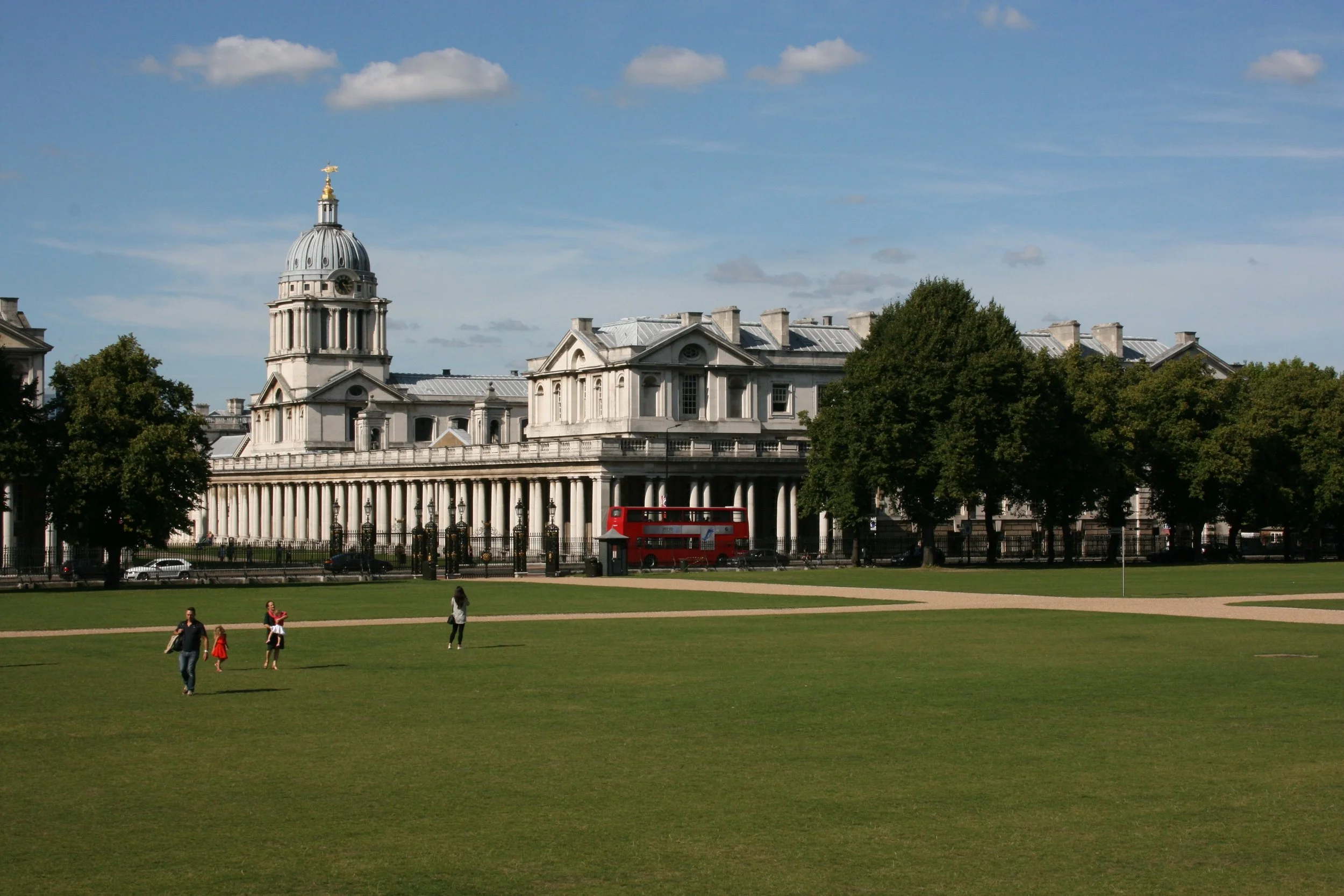
Greenwich Royal Navy College by Sit Christopher Wren
Greenwich's conservation areas
Beyond the World Heritage Site, Greenwich has a number of designated conservation areas covering historic neighbourhoods including Greenwich Town Centre, Blackheath, Maze Hill and Westcombe Park. In these areas, permitted development rights for extensions are more restricted, and the choice of materials is subject to greater scrutiny.
Conservation area consent may be required for certain works, and the design and access statement for any application needs to demonstrate a genuine understanding of the area's character and the proposal's relationship to it. New Makers Bureau's heritage experience means we approach these applications with confidence, not anxiety.
How to make a sustainability case in a heritage context
The most common concern we hear from clients with properties in Greenwich's conservation areas is that sustainable materials will be refused on heritage grounds. In our experience, this is rarely the case when the argument is made properly. Reclaimed brick is historically appropriate as well as low carbon. Lime mortar is the correct material for solid brick construction. Natural insulation materials are breathable in a way that is compatible with traditional construction.
The planning argument for sustainable materials in a conservation area is not a difficult one to make. It requires clear material specifications, good visual references and a straightforward explanation of why the proposed materials are appropriate for the building and the setting.
Permitted development in Greenwich
Permitted development rights for home extensions in Greenwich follow the national framework, but are affected by the conservation area and Article 4 direction designations in certain locations. In parts of the borough, rights that would normally allow a rear extension without planning permission have been removed, requiring a full application instead.
Before committing to a design approach, it is worth establishing what consents will be needed for your specific property. New Makers Bureau can advise on this at the outset of a project, saving time and avoiding surprises later.
Planning a Sustainable Extension in London: What the Boroughs Actually Require